

Expense Approval
How to clear the Expense Approval Backlog in Job Book: the columns, the quick filters and the filter icon, batch approval and Undo Last Approval Batch, and what happens to an expense once it is approved.
Key Concepts
An expense is a claim by a member of staff for something they paid for out of pocket. It is filed, approved, and then processed, and this page is the middle step: the Expense Approval Backlog is where submitted expenses wait for a Manager or an Administrator, in practice the job’s project manager, who is named on every row. Approve blindly and you risk paying staff the wrong amount or billing the wrong client. What expense tracking does for your job costs is on the Expenses product page.
- Approve regularly: reimbursements go out on time and the general ledger and job budgets stay current.
- The same records as Not Approved: the backlog holds exactly what the Not Approved view of the Expenses list holds, shown as a grid instead of cards. Filing an expense is covered in Expense Entry.
- Approved is not Processed: approval is this screen’s job. Processed is the step after it, ticked elsewhere, and what it means is your company’s call; see What happens after approval.
Performing Common Tasks
Opening the backlog
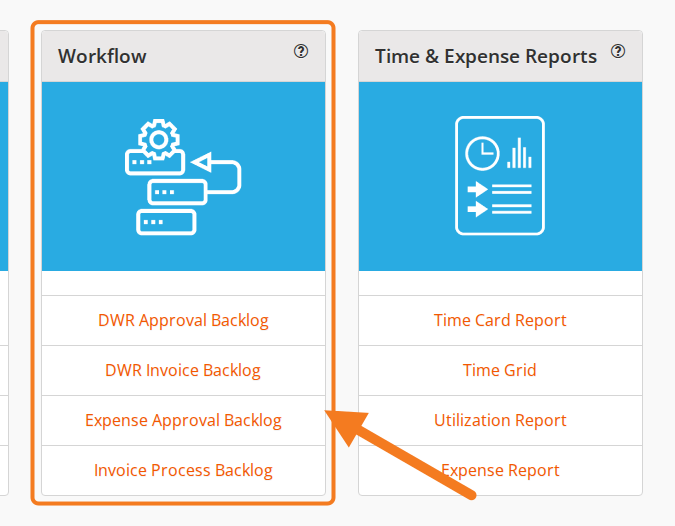
On the dashboard, in the Workflow card, click Expense Approval Backlog.
Approve Selected Expenses is at the top left and Undo Last Approval Batch at the top right.
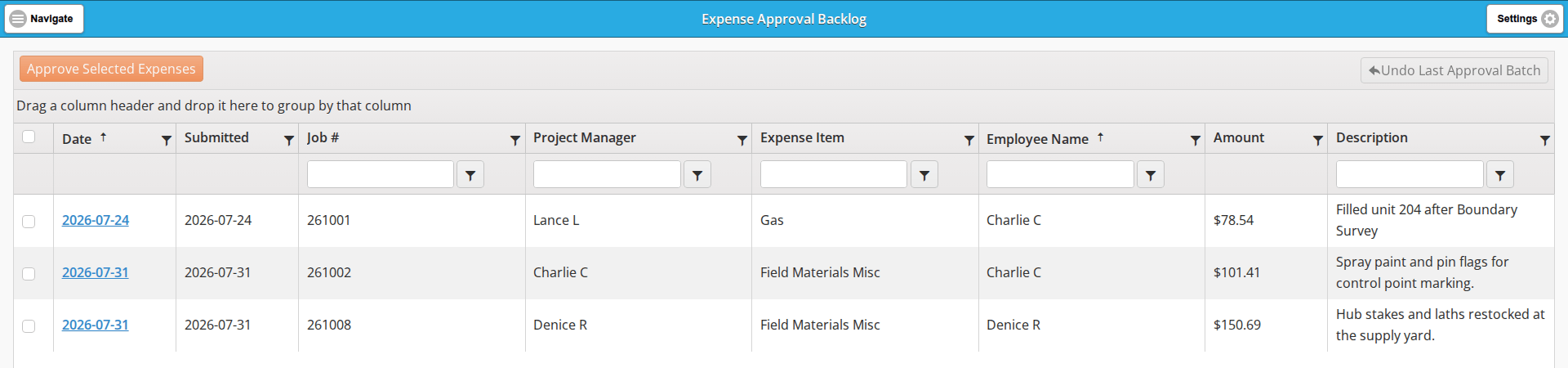
The grid is the one the backlogs share. Ticking rows, the batch button, sorting, grouping, the funnel filter, the filter row and undo are all described on Backlog Grids. This page covers what is particular to expenses.
Reading the table
The columns are Date, Submitted, Job #, Project Manager, Expense Item, Employee Name, Amount and Description. The Date column contains hyperlinks to the individual expenses, and each one opens in a new browser tab. The table gives you all the information needed to approve an expense without opening it.
Sorting, filtering and grouping
By default, expenses are sorted by Date and Employee Name in ascending order. That means the oldest expenses appear first, and within each day they are sorted by Employee Name.
To see only the expenses over $100, click the funnel on Amount, choose Is greater than, type 100 and click Filter.
Correcting an expense before you approve it
If an expense needs only a minor fix, such as a typo, you can correct it on the spot: click the Date link to open the expense, then click Edit. If the submission needs more work, or cannot be approved as it stands, hand it back: open it the same way, click Edit, clear the Submitted checkbox and click Save. The expense leaves the backlog and returns to the employee’s My Expenses view as a draft, for them to correct and submit again. Tell them what needs to change and why.
Approving expenses
- After you have reviewed the expenses, tick the ones you want to approve and click Approve Selected Expenses.
- The confirmation names the number of expenses. Click OK.
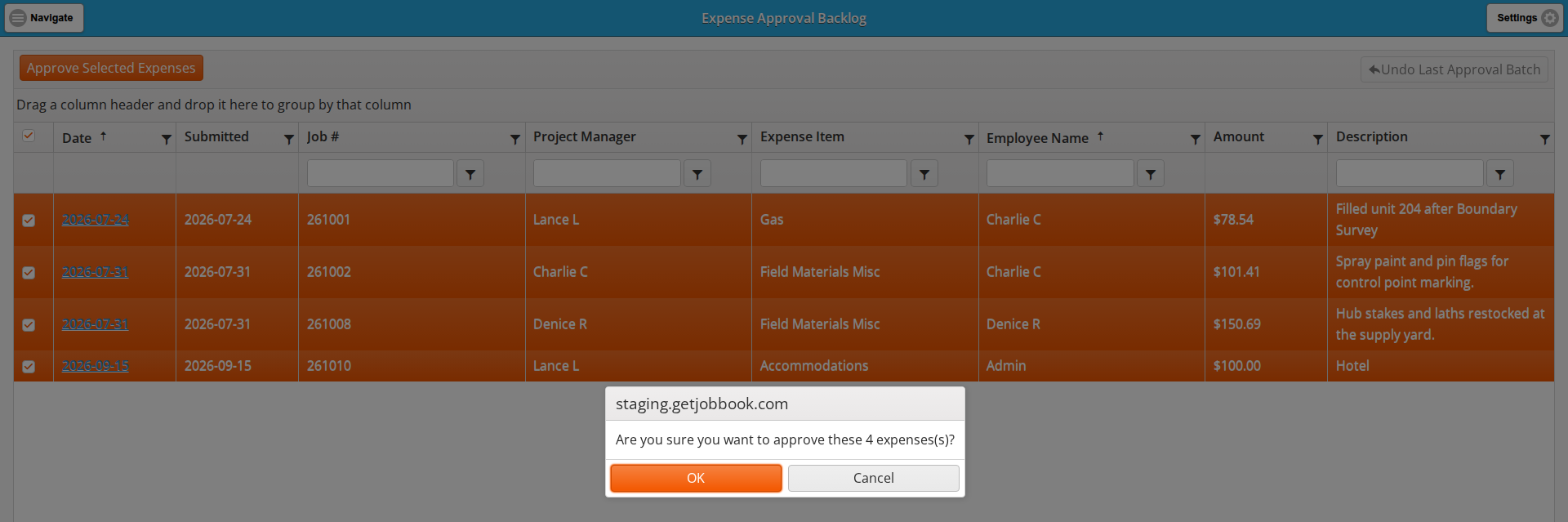
The selected expenses are now approved and drop out of the backlog immediately.
Undoing an approval
Undo Last Approval Batch brings back the expenses from the batch you just approved.
To unapprove a single expense: on the dashboard, in the Expenses card, click Explore, open the All view and locate the approved expense. Open it, click Edit, uncheck the Approved checkbox and save.
What happens after approval
Approval hands the expense on. It leaves this backlog, and the Expenses list shows it in the Admin Queue view until someone ticks Processed. Processed is the last step, and what it stands for is your company’s decision. Some of our customers tick it when the employee has been paid back; others tick it when the expense has been put on the invoice that charges the client, which is done from the Expenses: table on the invoice (Invoices).
Approval changes nothing on the Active Job Dashboard: its Expense $ column already counts every submitted expense, approved or not.
Best practices
- Schedule a daily approval window. Clearing the backlog at the same time each day keeps reimbursements predictable for staff.
- Scan for duplicates before you approve. If two employees submitted the same hotel receipt, sort it out before the batch goes through.
- Check the job on each expense, not just the amount. An expense filed against the wrong job distorts two budgets.
- Open the attachment and check it is legible. Ask for a replacement rather than approving a receipt nobody can read later.
- Agree on what Processed means at your company and who ticks it, so an expense is not paid back or invoiced twice.
- Group or filter to reach the risky ones first: large amounts, a single job, or an employee with many submissions. See Sorting, filtering and grouping.
Video
 Coming soon
 Last updated