

Clients
How to open the Clients list, read a client record, and create a client in Job Book with its contacts, billing addresses, client types and rate sheet.
Key Concepts
Every job in Job Book must be tied to a client record, so the client comes first and the job points at it. A client record carries the customer’s name, the people you deal with, the addresses invoices are sent to, and the defaults a new job for that client starts from. The Clients list is Job Book’s customer database, its CRM; what that does for your business is on the CRM & Customer Database product page, and this page is how to work it.
- Defaults for jobs: the rate sheet set on the client is what every new job for that client starts from, so set it once here rather than on each job.
- Contacts and addresses feed the job and the invoice: the client’s contacts are the people a job can name, and its addresses are the billing addresses a job and its invoices use. See Adding billing addresses.
- Two client numbers: System Client Number is the number the system gives the client. It reads Pending until the client is saved, and it cannot be edited afterwards. Client Number Alias sits beside it and can be edited to any unique text, so you can match your own numbering.
Only an Administrator or a user with the Job Coordinator role can create clients. A Manager without that role has a save from the client form refused, so such Managers read clients rather than maintain them.
Clients are used well past the job itself: when exporting invoices to your accounting system, all invoices need to include the client’s name and address.
Performing Common Tasks
Opening the Clients list
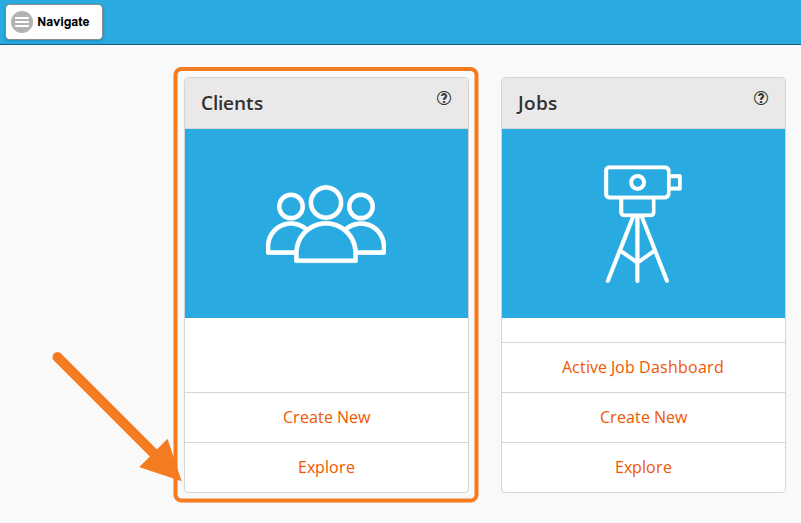
On the dashboard, in the Clients card, click Explore.
The Clients list opens on the Active view. Click All to see all the active and inactive clients in the system.
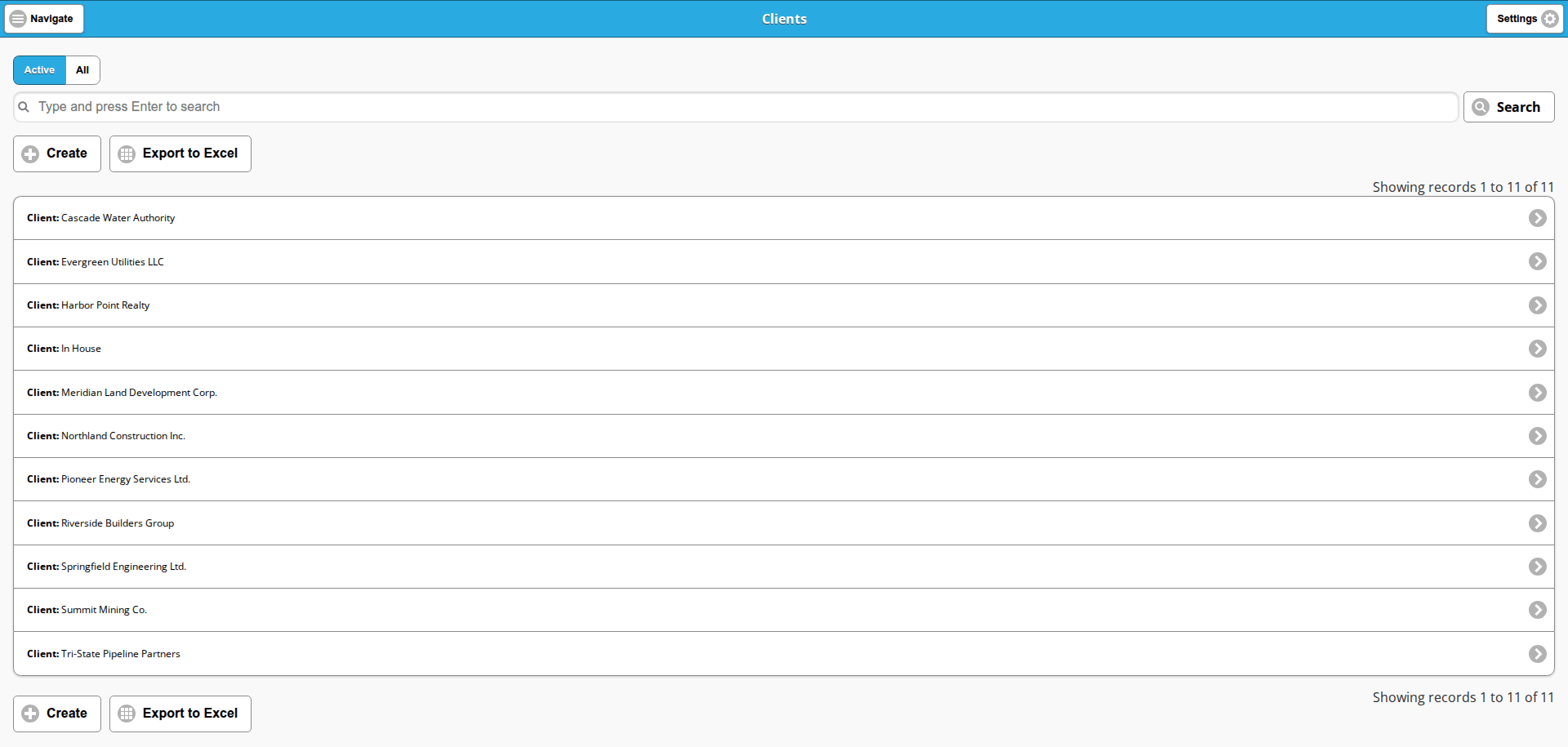
- Type into the search box and press Enter, or click Search, to narrow the list.
- Create opens a blank client form and Export to Excel downloads the list. Both buttons appear above and below the cards.
- Each card reads Client: followed by the client’s name. Click a card to open that client.
Viewing a client
Clicking a client opens its display view, which is read-only. The buttons above and below the record are Edit, Export to PDF, Delete and Back, which returns you to the list.
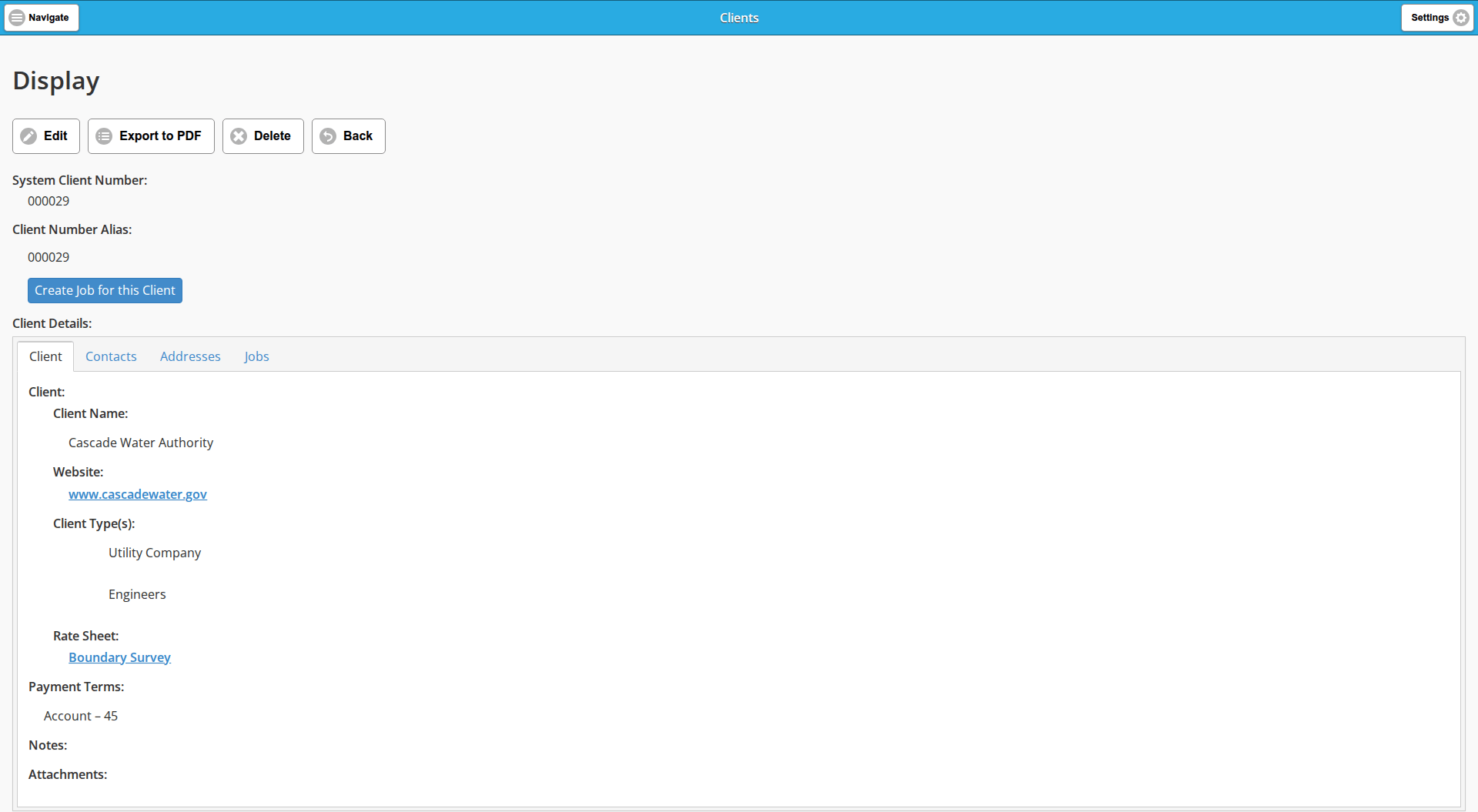
- System Client Number and Client Number Alias are shown at the top, above a Create Job for this Client button.
- Client Details: holds the tabs Client, Contacts, Addresses and Jobs.
- The Client tab shows the client’s own fields: Client Name:, Website:, Client Type(s):, Rate Sheet:, Payment Terms:, Notes: and Attachments:. The website and the rate sheet are links.
- Active: at the bottom shows whether the client can still be picked when a job is created.
Referenced clients can not be deleted. To take a client that is in use out of circulation, see Retiring a client.
Seeing the jobs for a client
The display view’s fourth tab, Jobs, lists the jobs already booked to this client. It is a plain table of Job #, Status, Order Date and Due Date, and each Job # is a link that opens the job. The tab is on the display view only; a client being created has no jobs yet, so the create form has no Jobs tab.

Creating a client
There are three ways in:
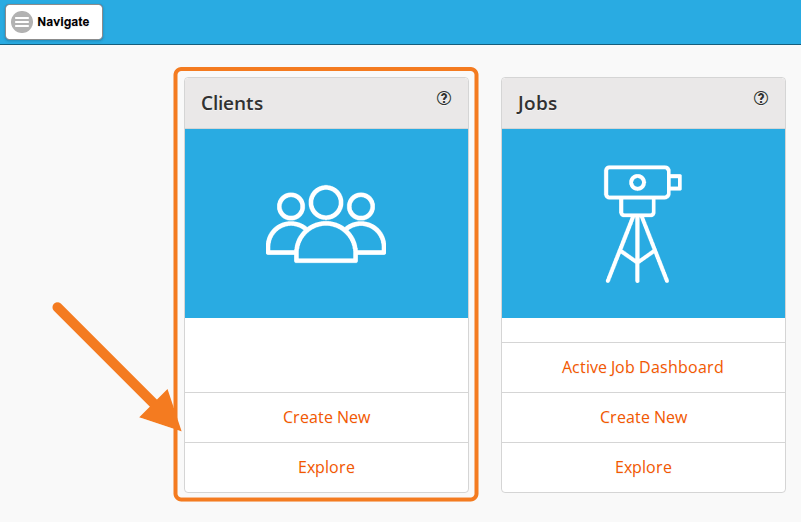
- On the dashboard, in the Clients card, click Create New.
- In the Clients list, click Create.
- On the job form, click Create New Client under Client (Selecting a Client will allow entry of Job details), when the client you need does not exist yet.
The form opens titled Create, with System Client Number reading Pending at the top, and the tabs Client, Contacts and Addresses. Any field with a red star is required. Work through the tabs in order and save once at the end; Save and Cancel sit below the tabs, beside the Active checkbox, and apply to the whole record. Leave Active ticked; clearing it is how a client is retired, as described under Retiring a client.
Filling in the Client tab
The first tab is the Client tab, and the first field is Client Name:.
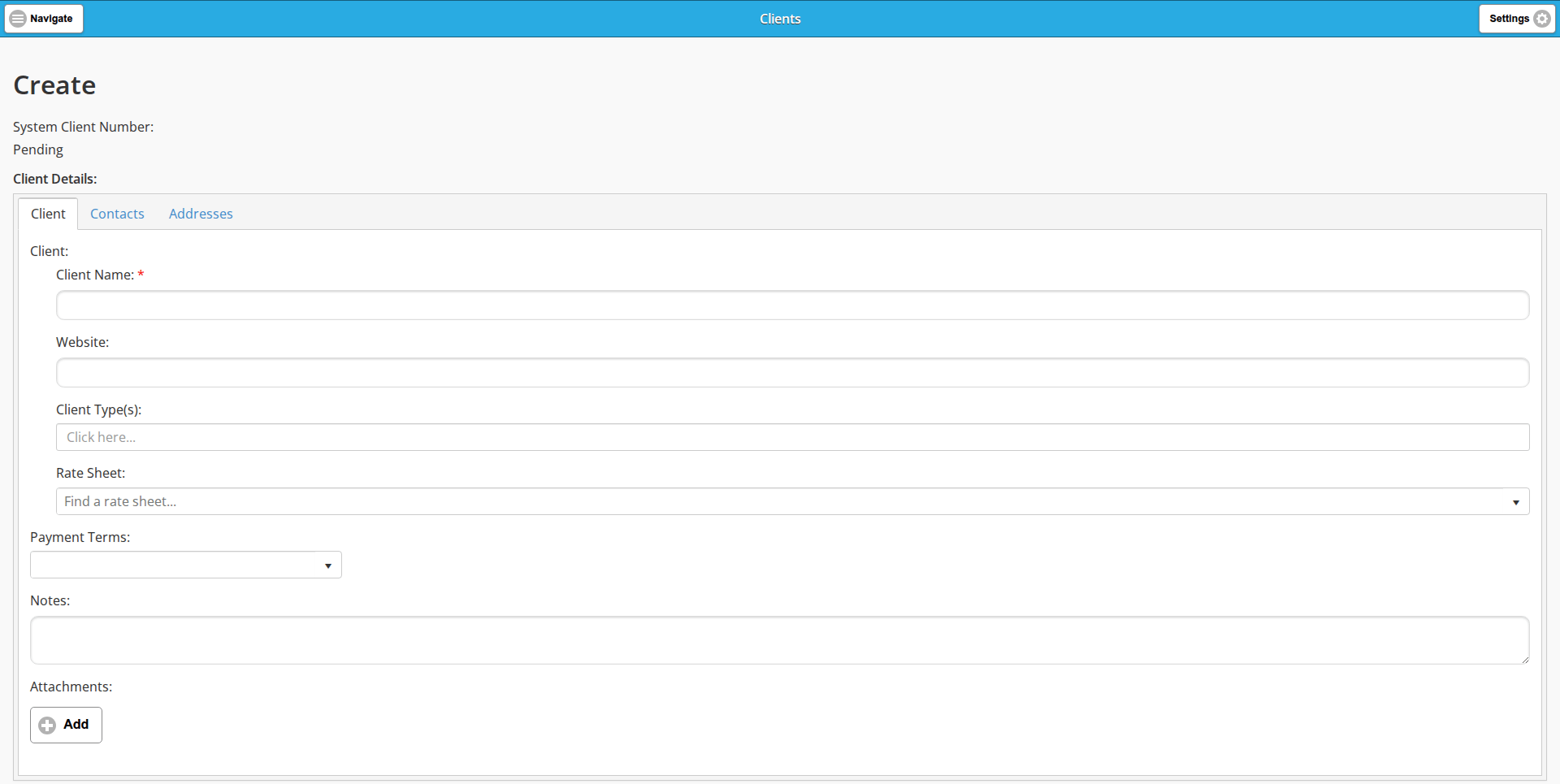
- Client Name: required. Usually the company name; for residential work, use the homeowner’s name. Enter it exactly as it should appear on jobs and invoices.
- Website: the client’s web address.
- Client Type(s): click the field and pick one or more premade types. Jobs can then be found by client type in the Job Explorer on Job Maps. The full list of types is on Job and Client Attribute Tags.
- Rate Sheet: start typing to find a rate sheet, then pick one. Jobs for this client will default to it.
- Payment Terms: choose one of the presets (Credit Card, Pay as Paid, Pay upon Delivery, Account – 30, Account – 45, Account – 60, Account – 90, Account – 120) or type in custom terms of your own.
- Notes: free text; you can type multiple lines here.
- Attachments: click Add to upload files, such as a contract or a signed rate agreement.
Adding contacts
Move to the Contacts tab. Here you can add as many contacts to the client as you like. Click Add to add the first contact, fill the row in, then click Add again at the bottom of the tab for each further contact. Each row carries a remove icon on its left if you add one by mistake.
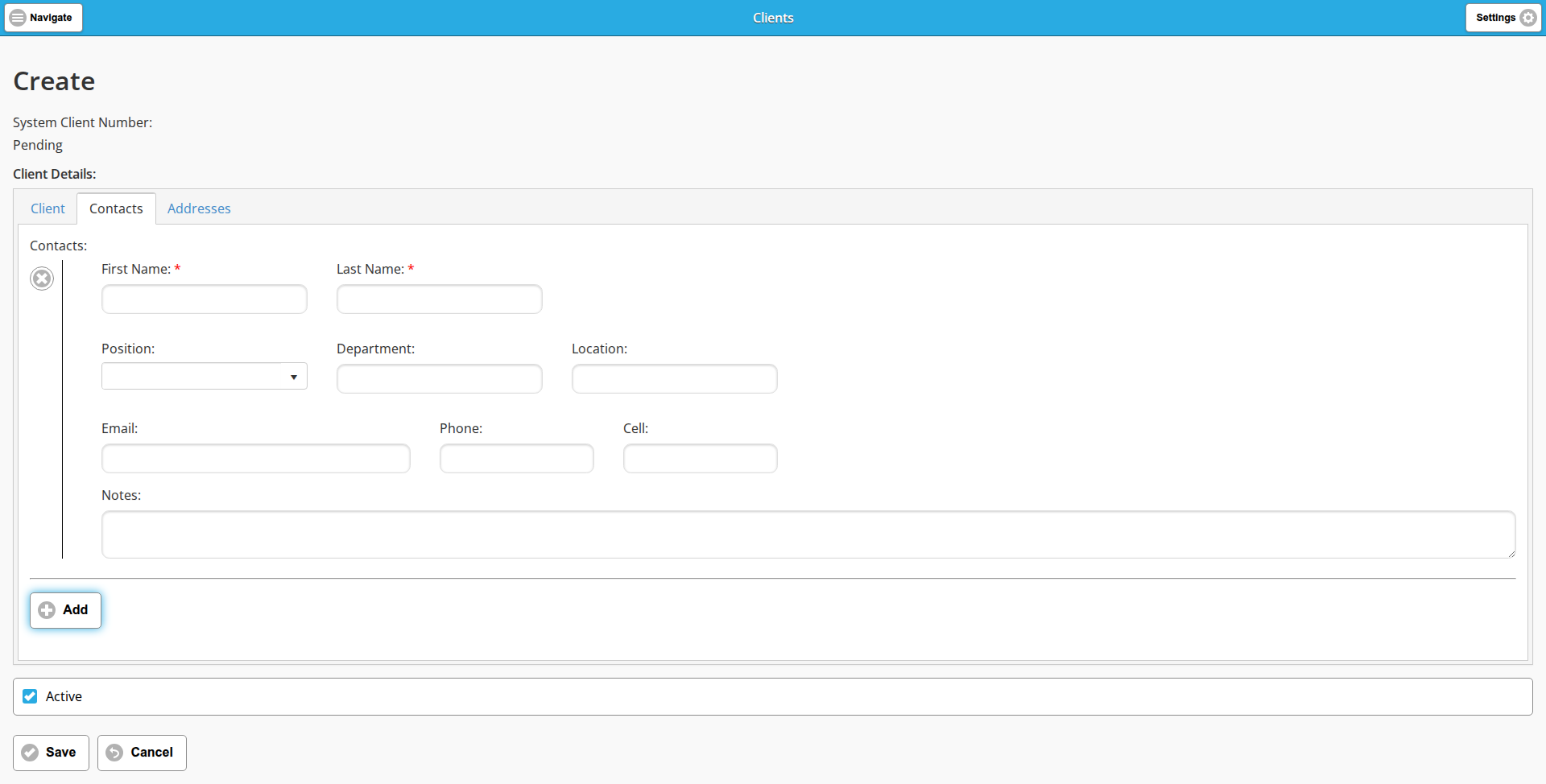
A contact row holds:
- First Name: required.
- Last Name: required.
- Position, Department and Location: where the person sits at the client.
- Email, Phone and Cell.
- Notes.
Adding billing addresses
Scroll up and click the Addresses tab, then click Add to add an address to this client. If your customer has multiple offices or mailing addresses, add them here. Each one is offered in the Client Location picker when a job is created for this client, and the job’s invoices go to the one it uses. See Job Setup.
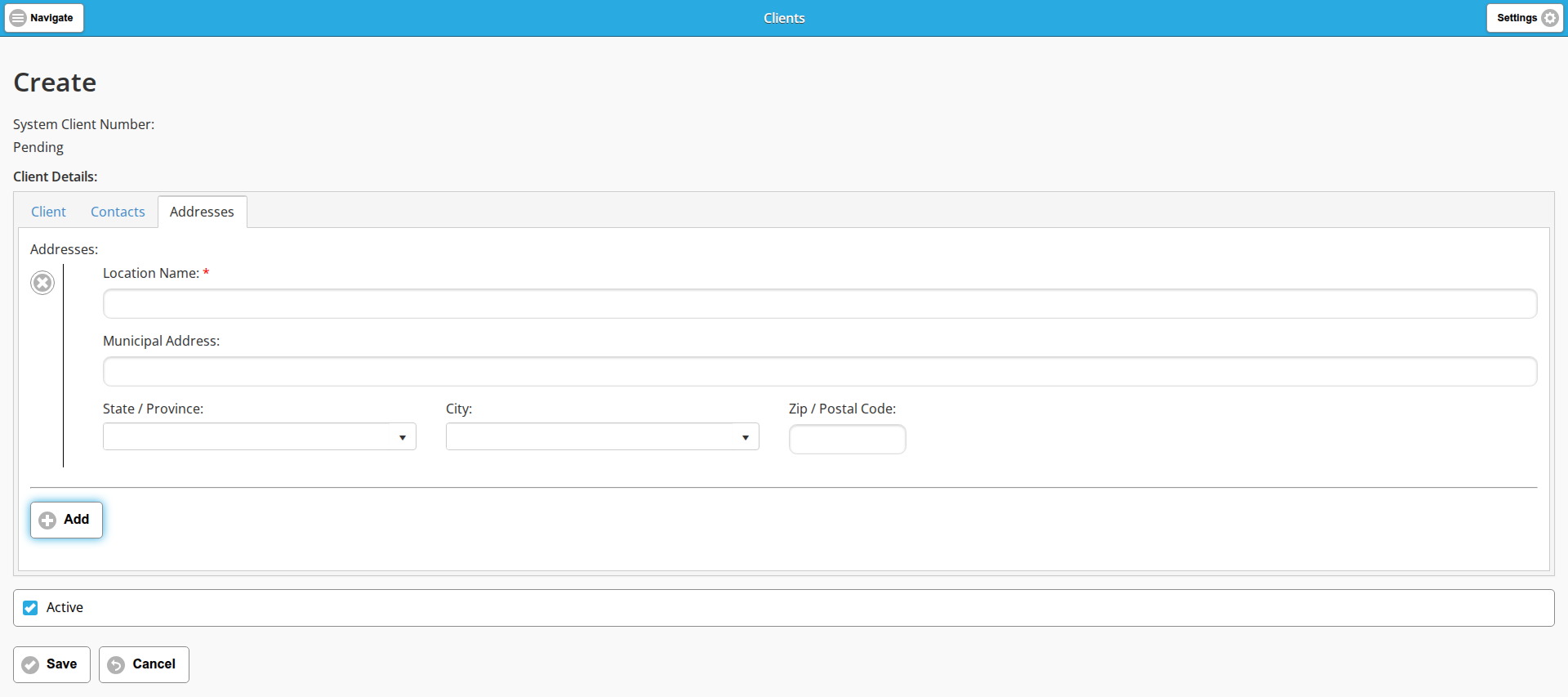
An address row holds:
- Location Name: required. The name you know the address by, such as Home Office.
- Municipal Address: the street address.
- State / Province and City: picked from lists.
- Zip / Postal Code.
Saving the client
Scroll down and click Save. If you missed a required field, it is highlighted in red; if you don’t see the red field, check the other tabs. Once all the required fields are set, the client saves and you go back to the dashboard. To open the client you just made, go to Explore on the Clients card and click its card; its display view carries Create Job for this Client. Cancel leaves the form without saving.
Editing a client
Open the client from the Clients list and click Edit on its display view. Every field except the System Client Number can be edited.
When your edits are complete, click Save. You return to the client’s display view.
Retiring a client
Job Book refuses to delete referenced data, so a client that is in use cannot be deleted. Deactivate it instead:
- Open the client and click Edit.
- At the bottom of the client there is an Active checkbox. Clear it.
- Click Save.
The client keeps its history, but it can no longer be picked when a job is created, and it drops out of the Active view of the Clients list; the All view still shows it.
Video
Last updated